Search our website
Call us FREE on
0808 196 6093
Open today 7am - 5pm
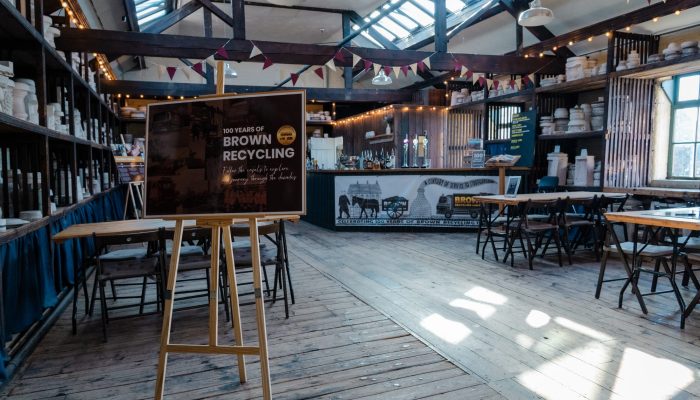
An awful lot has changed in the last 100 years. We’re currently living in the Information Age, following rapid evolutions in technology, globalisation and geopolitics. Waste management has quietly been keeping up with the times, and as Brown Recycling Limited celebrates its centenary year, it has been there through all of it. This blog pairing takes you through the history of waste management, with a local and personalised twist.
Part one covers the major changes in waste management right up to 1970. If you wish to skip to part two of our History of UK Waste Management blog series, we discuss all the major advancements from 1970 right up to the present day as well as what the future of our industry is shaping up to look like.
What better place to start than the year it all began for us? You might be surprised to hear that, by 1926, waste incineration was already over 50 years old. However, very little focus was put into deriving energy from waste (EfW). Instead, these facilities were known as ‘destructors’, and as the name suggests, that’s primarily what they did. Any waste destructors in Stoke-on-Trent during this era appear to have been lost to the history books, but we’re sure our founder, Samuel Brown, would have been very active in using them.
Samuel was a very experienced coal carter. Operating primarily out of the Werrington area of Stoke-on-Trent, his job was often very physically demanding as he would supply coal to homes, businesses and factories. Following the industrial revolution in Britain (1760 – 1900), his job was also very important in an age where steam-powered machinery was used to keep the country moving forward.
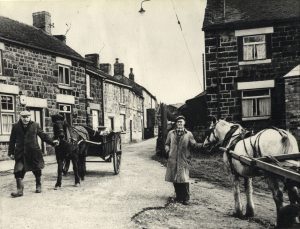
Alongside son Herbert – also a coal carter by trade – and his trusted horse & cart, Samuel capitalised on an opportunity to service the booming Pottery industry, offering to remove ‘shraff’ (a Staffordshire term for moulds, used saggars and broken pottery) and other waste once each new coal delivery was complete. We think this was our first official waste contract and are sure the waste would have been sent to a local ‘destructor’.
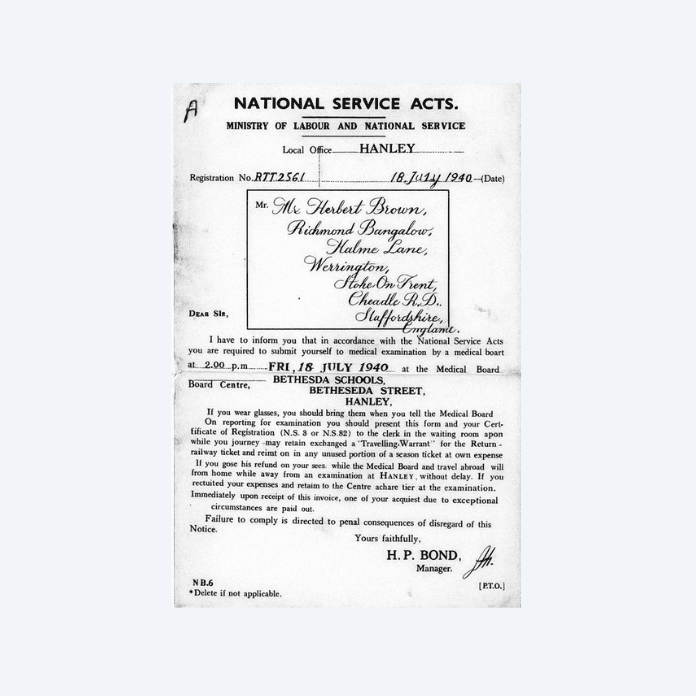
The outbreak of World War II shifted priorities, and even the waste sector had to do its bit for the war effort. In a July 1940 broadcast, Labour MP and wartime Minister of Supply Herbert Morrison announced the launch of the National Salvage Campaign. He urged the public, “I ask people to start now and save their paper, bones and scrap metal. In that way, we shall build up a great reserve of raw materials ready to be transformed into war materials.”
Waste collection points were set up everywhere, and people were galvanised to separate all sorts of household rubbish into boxes at their local constituency. Waste sorting as we know it today was certainly in its infancy in 1940, but this campaign certainly helped speed up the process. As men were often conscripted to the military or to factories, the responsibility fell on housewives to ensure their waste was correctly and efficiently donated to a sorting depot.
In 1942, the scheme became mandatory, and those refusing to sort waste could be fined £2,500 and face up to two years in prison. The campaign continued to be promoted right up to 1950, and while no complete figure ever existed for waste to war material, it certainly ramped up production of aircraft, weapons, ship parts, gas masks and even explosives to help Britain win the war.
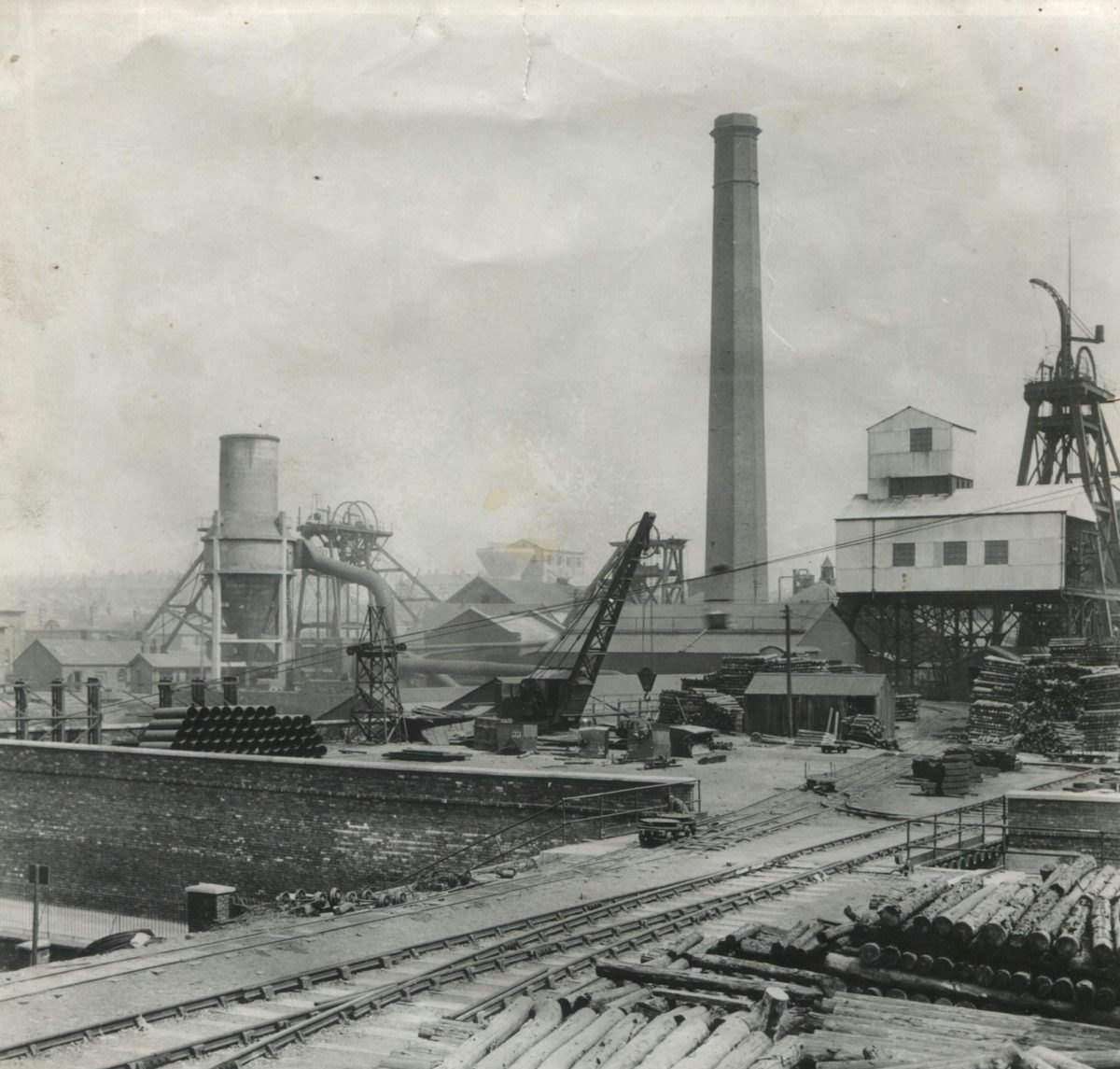
Closer to home, our very own Herbert, Herbert Brown, was conscripted to work down the coal mines due to his experience as a Coal Carter. Unfortunately, this put the expanding business on hold, but only temporarily.
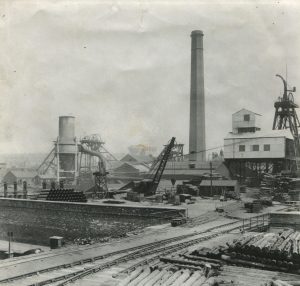
During his time down the mines, Herbert was involved in an accident at Berryhill Colliery, Stoke-on-Trent, in 1941, narrowly escaping with his life in an incident that claimed the lives of several men. As a result, he left mining behind, enabling him to resurrect his father’s business in the post-war years.
By 1949, Herbert had successfully rebuilt the company, officially naming it H BROWN for the first time. Horses and carts continued to be used to deliver materials to the Pottery industry and remove any waste in return.
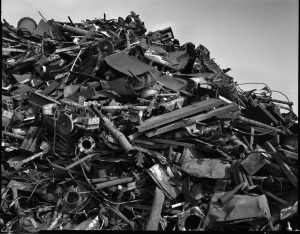
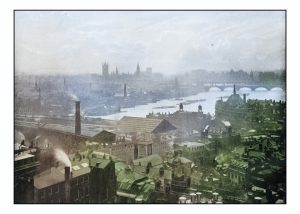
The 1950’s started with the UK government taking back control of air pollution for the first time in recorded history. The straw that broke the camel’s back was the London smog disaster in December 1952, caused by airborne pollutants from the use of coal and estimated to have contributed to over 12,000 deaths. The Clean Air Act 1956 was passed to combat emissions of smoke, grit and dust in towns and cities and introduced smoke control areas where only smokeless fuels could be burned.
It was a landmark piece of environmental legislation then, and its fundamental objectives to control domestic and industrial smoke emissions are still in effect today.
More locally, two smaller-scale “destructor” works existed in the city of Stoke-on-Trent. The primary site on Cromer Road, Hanley, and a combined electricity and destructor works on Yeaman Street.
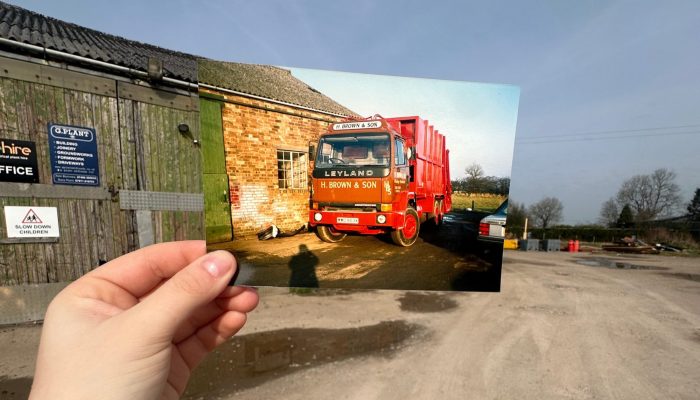
At around the same time, Herbert’s son William joined the newly named H BROWN & SON (a name that would stick for six decades), and the company began to use motorised vehicles for the first time, investing in two ten-tonne tipper lorries to expand their waste collection frequency and reach. With their investment in the trucks, they would have definitely tipped their waste at these locations right up until the mid-1960’s.
The decade ended with the foundation of a UK-wide body to unify all private sector waste management firms. In 1968, the National Association of Waste Disposal Contractors (NAWDC) was established to ensure industry standards were upheld across private waste contractors. In the same year, the first plastic wheelie bin was invented in the UK by a company called Frank Rotherham Mouldings in Slough.
However, research suggests the plastic variant was only drafted in to transport waste across his factory floor more easily. It was never intended to see the light of day beyond that. In a twist of fate, a health inspector spotted this solution whilst on a routine visit, identified its potential to replace metal bins – which had caused back problems for dustmen for decades – and the rest is history.
In part two, we explore the evolution of waste management from 1970 to the present day and look ahead to the future as Brown Recycling embraces the AI age and advances its sustainable development goals. After all, waste is one thing that always has and always will endure. Five generations into our journey, we remain as committed as ever to helping households and businesses manage theirs responsibly.
Jordan is a marketing professional with a degree in Broadcast Journalism and a CIM qualification in Professional & Digital Marketing. With over a decade of experience in B2B and B2C multichannel campaigns, Jordan has led projects across both digital and offline media. Outside of work, Jordan enjoys football, theatre, live music, and all things pop culture.