Search our website
Call us FREE on
0808 196 6093
Open today 7am - 5pm
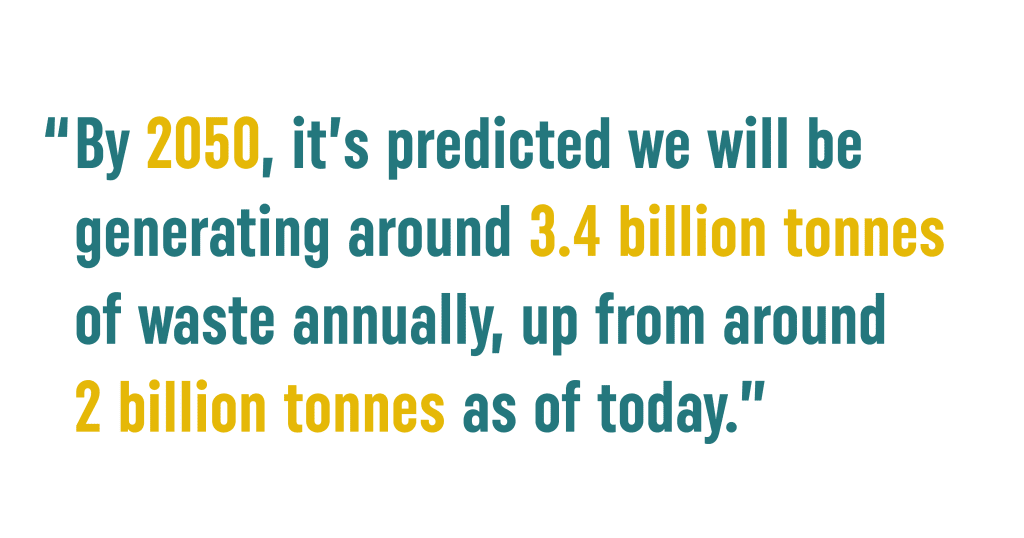
The fact that waste generation is on the rise globally is unignorable. By 2050, it’s predicted we will be generating around 3.4 billion tonnes of waste annually, up from around 2 billion tonnes as of today.
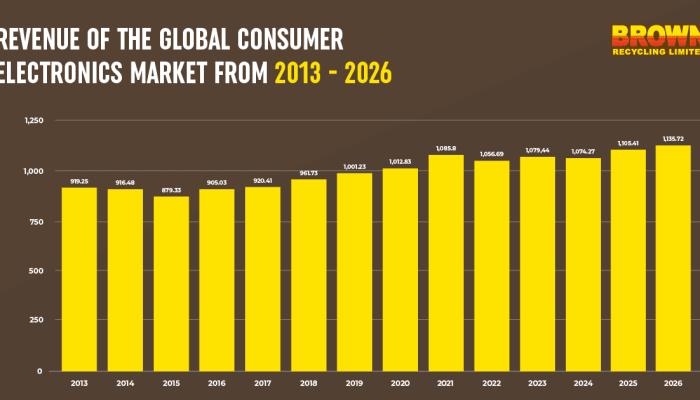
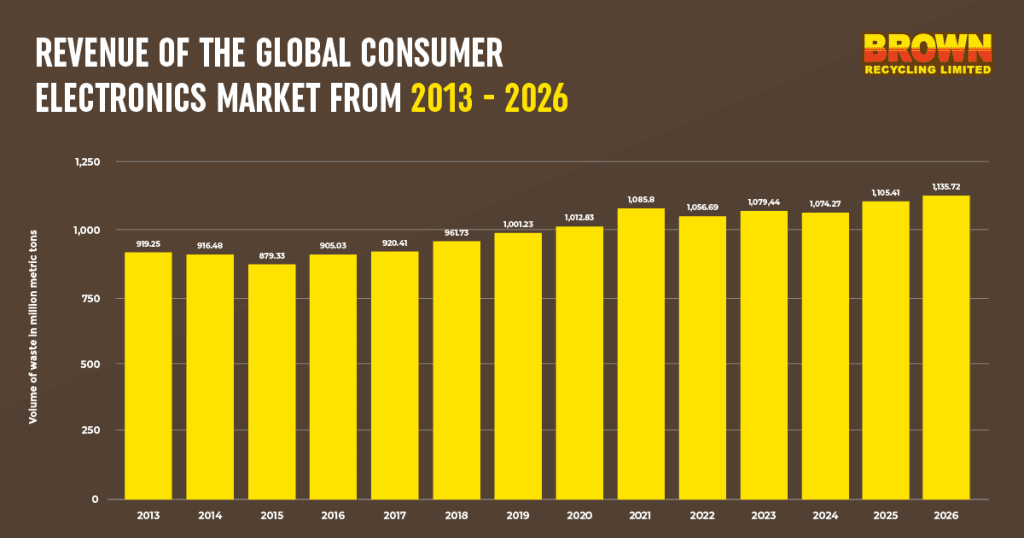
However, what’s perhaps even more alarming is the speed at which electronic waste alone is rising. According to Statista’s Consumer Market Outlook, by 2026, the global consumer electronic market will be worth over $1.1 trillion, a figure that has been rising steadily since 2015 and shows no signs of stopping. Over 1.5 billion smartphones are bought and sold each year alone, and only a fraction of them will be collected and recycled properly.
In what follows, the Brown Recycling team will be taking a look at the rise of electronic waste – or e-waste as it’s commonly known – in greater detail, and looking at ways to combat its harmful effects.
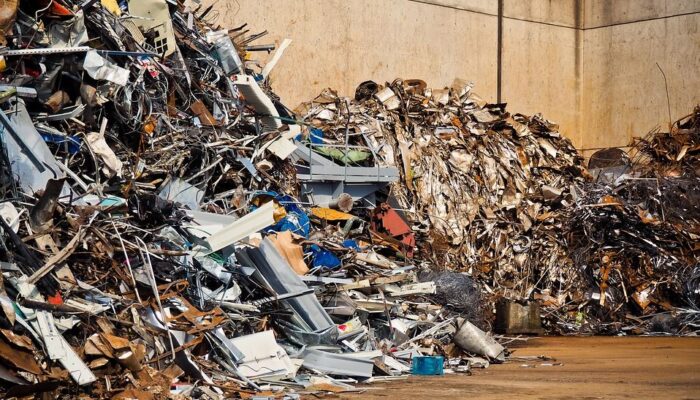
We can understand e-waste as anything with a plug, a cord or electrical components. Here are a few common e-waste items: mobile phones, laptops, television and kitchen appliances. E-waste encompasses a huge range of product categories simply because so much of what we use today is electrical in nature.
While all waste in landfill can cause harm to the environment, e-waste is particularly dangerous due to the number of different toxic chemicals that these products can produce. These toxic chemicals can then leach into the soil below which contaminates local water supplies.
A further compounding problem is that e-waste is often exported to less developed countries where archaic and dangerous recycling methods are utilised, such as acid leaching and cable burning, which can cause the release of hazardous hydrocarbons and other byproducts which can impact local communities.
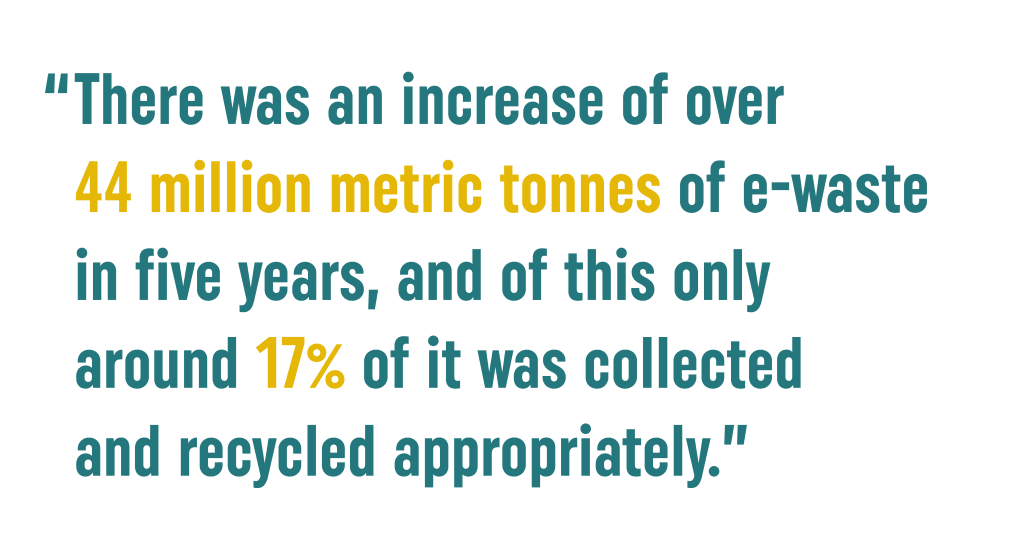
According to United Nations University, in 2010, 34 million metric tonnes of e-waste was produced worldwide. This figure consistently increased all the way up to 2019, when nearly 54 million metric tonnes of e-waste was produced. There was an increase of over 44 million metric tonnes of e-waste in five years, and of this only around 17% of it was collected and recycled appropriately. Perhaps even more frightening, this figure of 54 million could more than double to 120 million by 2050 if we don’t take action right now.
In terms of e-waste by region, Asia generates the largest volume of waste. In 2019, Asia produced nearly 25 million metric tonnes of e-waste, which is almost twice the amount of the Americas, the second highest generator. Unfortunately, of the amount produced, less than 12% of it was collected and appropriately recycled.
Brown Recycling is the leading, independent provider of total waste management and recycling services to businesses across Staffordshire, Cheshire and the Midlands. We help companies of all sizes throughout the region stay on top of their waste by carrying out a thorough audit and providing a bespoke waste management solution that works for them. As hazardous waste specialists, we understand the gravity of the burgeoning e-waste problem, which is why we wanted to do our bit to educate people about it as much as possible.
If you would like to discuss e-waste or WEEE recycling with us, please don’t hesitate to give us a call or simply use our Get a Free Quote builder form.