Search our website
Call us FREE on
0808 196 6093
Open today 7am - 5pm
With UK businesses disposing of millions of tonnes of waste each year, the new Simpler Recycling rules have placed a spotlight on recycling efforts. And while they only apply to larger businesses right now, smaller businesses will also need to adhere to the same legislation next year.
But that means now is the best time to conduct a waste audit.
Many companies may not know what they’re throwing away week-to-week, or how they can make savings while becoming more environmentally efficient through recycling. This guide to waste audits is designed to help you understand the benefits and how to conduct your own, putting you in a positive position for the future.
Waste audits offer a systematic approach to the sorting, assessing and recording of the waste your business generates over a given period. It tells you exactly what’s going into your bins, the different waste streams you generate, where it all comes from and how much of it could be recycled to reduce the amount being sent to landfill.
In our experience of working with businesses across the Midlands, we find that in their first waste audit they uncover multiple avenues for improving efficiency and cost savings.
Whether you operate in hospitality, manufacturing, construction or retail, a waste audit will help you find out what’s going into general waste bins and how much of that could be segregated at source. The benefits of this are numerous, and include:

Once you’ve arranged for a waste audit to be undertaken, it’s time to prepare so that you can extract the most actionable data. Here are the key steps to follow:
Set your scope and timeframe – Decide which areas of the business to include and the dates.
Now you’ve completed your preparation, here’s how to run the audit itself. How long it takes will depend on the size of your operations and the window of time you’re auditing, but these steps cover the general flow:
It may sometimes be difficult to identify all of the potential improvements and best practices for your business. You may find it more practical to engage with our team, as we are always on hand to provide a free site audit for large commercial operations.
You’re almost ready to get meaningful results from your audit, but first, you need to calculate the results.
The best way to do this is to take the percentages across all categories or individual bins to achieve a total. You can then express each category – cardboard and paper, plastic, food waste, etc. – as a percentage of that overall total to find out which materials your business disposes of most and whether it’s going in the right containers.
With this data, you will be able to calculate how much waste you could potentially be recycling versus what you actually recycle. From this, you could also calculate with your waste management provider how much you could save if your recycling rates were improved. Your final numbers can also help you to ensure you have the right containers to help you recycle efficiently.
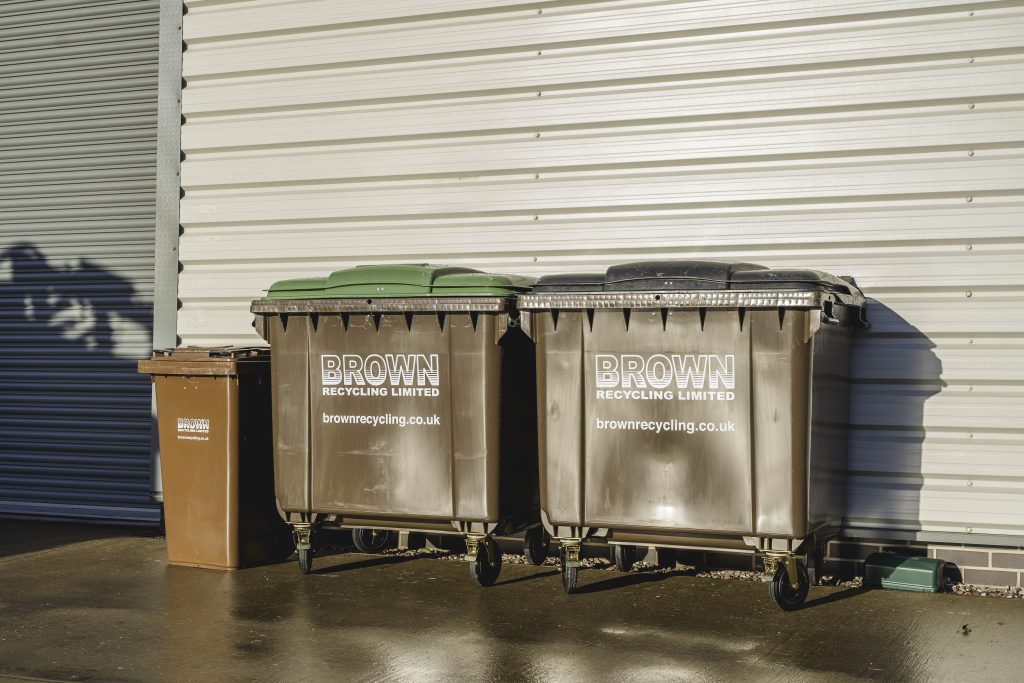
As one of the most straightforward and positive things your business can do to understand and reduce waste costs, we highly recommend a waste audit. And you don’t have to do it alone.
Contact us today at Brown Recycling for a comprehensive waste audit with innovative solutions at your site. There’s no obligation, and we won’t apply sales pressure, just clear and honest advice for your business wherever you are in Staffordshire, Cheshire and the Midlands.
Regina is a digital content marketing specialist at Brown Recycling. Having spent almost four years at Brown Recycling, she has developed extensive waste management knowledge, with a particular focus on scrap metal. Away from the office, she enjoys going to gigs, keeping active at the gym and exploring new hiking routes.